
Training & Education · Business & Coaching
The 12 Week Training Block
By the Hidden Gym Team
Published

Direct Answer
The short version
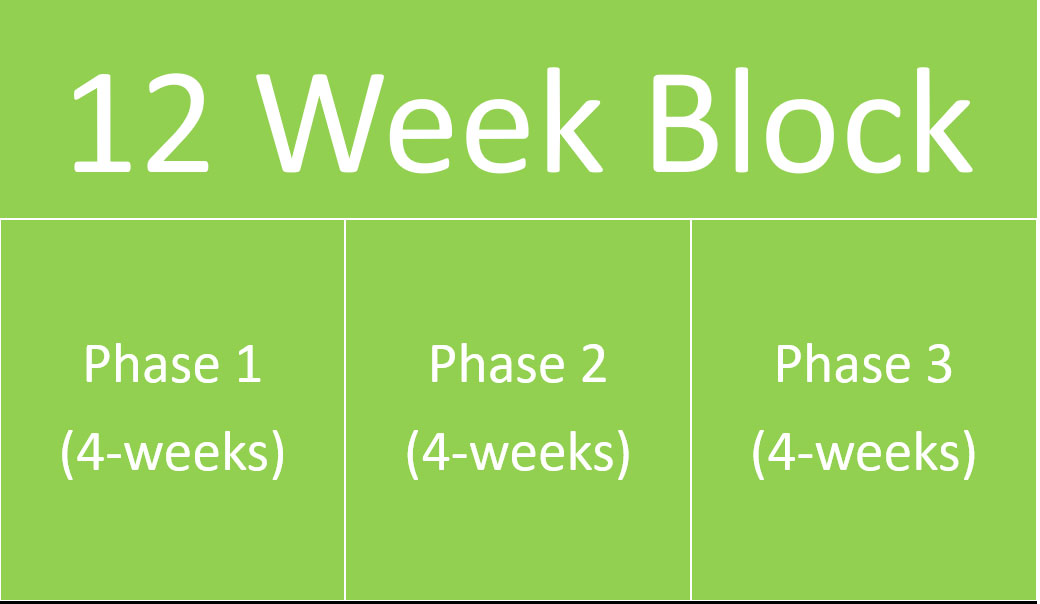
Hidden Gym structures training in 12-week blocks made up of three 4-week phases to give athletes enough time to make substantial progress without changing too much too often. The article explains that this format supports adaptation, helps athletes learn and master movements, and fits the broader training year from offseason to inseason.
Key Takeaways
- Hidden Gym divides its programs into 12-week blocks made up of three 4-week phases.
- The article says 12 weeks is enough time to obtain substantial results and allow for three phases of adaptation.
- It states advanced athletes need less variety, not more, in their training.
- Each 4-week phase progresses from exercise familiarity to movement mastery and true strength gains.
- By week 4, athletes should know their capabilities and push to beat prior performances.
Our last coaching video, The Training Year, (review HERE) discussed how we look at physique sport athletes programming over the course of the year moving up and down the pyramid from Offseason to Inseason and the goals of each part of the year. Hopefully you completed the quiz and that prompted some healthy reflection about how you can maximize your current and upcoming phases as an athlete.
Next up we will discuss the 12 Week Training Block. All of the [Hidden Gym] Programs are divided up in 12 week “blocks” that consist of 3, 4 Week Phases. This video discusses why we do it this way. Notes for reference are included below.
To test and improve your application of these concepts we advise filling out this short quiz:
https://www.flexiquiz.com/SC/N/b6ea681f-60a1-4a19-a26b-6aa5cf1fa5f7
Why 12 Weeks
- Enough time to obtain substantial results.
- Allows for 3 phases of “Adaptation.”
- Average amount of time before needing to consider a goal shift or deload
- Allows for enough changes, but not too many changes
- The more advanced you are, the LESS variety you need
- The more advanced you are, the LESS variety you need
- The more advanced you are, the LESS variety you need
What Should Happen During 4-week Phases
- Week 1
- Gain familiarity with exercises of that phase
- Begin to learn strength levels at prescribed rep ranges
- Ask questions about execution or unfamiliar techniques
- Week 2
- Better execution of exercises due to familiarity from week 1
- Weight increases likely due to improved skill, more so than actual strength gain.
- You likely got more efficient, not stronger already
- Week 3
- You are very effective at executing exercises.
- You are really pushing yourself to beat numbers from week 2, much harder to progress here than it was from week 1-2
- Week 4
- You have mastered the movements in this phase
- You know exactly what you are capable of and come prepared for each workout with intention to beat your previous performances.
- Adaptation to the exercises are taking effect and you should be achieving true gains in strength
- Beating your numbers from week 3 is a BATTLE
- Training Blocks
- Strength Training
- Coaching
- Program Design
- Athlete Development
Frequently Asked Questions
Keep Exploring
Related Reading
Training & Education · February 10, 2021
The Training Year
Training & Education · January 29, 2025
Coaches Corner – How Much Does Exercise Selection Matter?
Training & Education · January 29, 2025
Coaches Corner – Elite Mindsets for the New Year
Training & Education · January 9, 2024