
Podcast & Media · Podcast
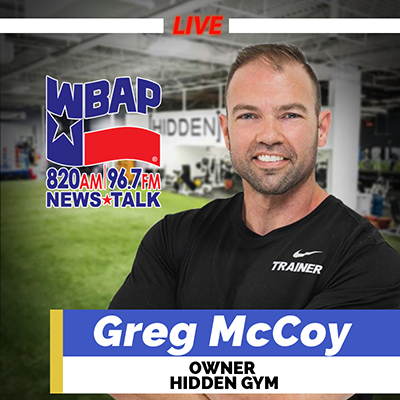
5 Minutes on WBAP with Greg McCoy
By the Hidden Gym Team
Published
Direct Answer
The short version
No, "no pain, no gain" should not be treated as an absolute rule in exercise. In this WBAP interview, Greg McCoy says most people should find a sustainable training level, spend only a small portion of workouts in the pain zone, and pay attention to recovery, age, goals, and diet.
Key Takeaways
- Greg McCoy says exercise should be sustainable for your lifestyle, goals, and priorities.
- For most people, only about 10% of exercise should be in the pain zone.
- Recovery matters because progress is made during recovery, especially as you get older.
- Even athletes should do most training at a sub-maximal level.
- The article says outworking a bad diet is technically possible but very difficult to sustain.
Exercise is essential for maintaining a healthy lifestyle, but how much pain should you be willing to endure in the process?
For years, the phrase "no pain, no gain" has been a popular mantra among fitness enthusiasts. However, is it really necessary to push yourself to the brink of discomfort to achieve your fitness goals? In a recent interview on WBAP, Greg McCoy, a healthy lifestyle expert, coach, and owner of Hidden Gym, explores the truth behind the saying and the importance of finding a balance between exercise and intensity.
In this blog post, we'll dive into the conversation with Greg and find out why this saying should not be an absolute rule. Get ready to rethink your approach to exercise and discover what really works!
Greg explained that when it comes to exercise, it's all about finding a sustainable place. If you're looking to speed up your progress, you may find yourself in the "pain zone" more often. However, for most people, only 10% of their exercise should be in this zone. It's important to consider your goals and how fast you want to achieve them.
Before starting the next super intense program, ask yourself whether it would be sustainable for your personal lifestyle, goals, and priorities.
Age can also play a role in how much pain is acceptable during exercise. As you get older, your recovery slows down, and you have to work smarter, not harder. Recovery is crucial because it's when progress is made. Even if you're an athlete, the bulk of your training should be sub-maximal, meaning not pushing yourself to the point of extreme discomfort.
The interview also touches on the idea of outworking a bad diet. While technically possible, it's really difficult to do so. Greg cited Michael Phelps' story of having to consume 14,000 calories of Mexican food daily to maintain his body weight while swimming six hours a day. It’s obvious that eating this much and working out at such intensity is not easily achievable for the everyday life of a busy adult.
According to Men's Health’s statistics on how long it takes to burn off certain foods, and it's more than challenging to keep up with a bad diet day after day.
In conclusion, "no pain, no gain" isn't an absolute rule when it comes to exercise. It's about finding a sustainable place and considering your goals. Age and recovery also play a role in how much pain is acceptable during exercise. And while it's technically possible to outwork a bad diet, it's difficult to do so consistently.
A healthy lifestyle involves both physical activity and a balanced diet. Exercise helps improve the body's ability to use nutrients efficiently, and a balanced diet provides the fuel for physical activity.
Ready to take your fitness game to the next level? If you live in Allen, Dallas, or Plano, make sure to get your free day pass to join Hidden Gym! Become a part of the most motivating place in the DFW area that will help you live a healthier life!
Check out our upcoming events and stay tuned for the next experiences that will challenge you to learn and grow!
- Podcast
- Greg McCoy
- Recovery
- Nutrition
- Exercise Intensity
Frequently Asked Questions
Keep Exploring
Related Reading
Podcast & Media · February 9, 2023
Episode 37 – Tim Oberhelman – Unleashed Podcast
Podcast & Media · November 29, 2022
Nutrition in the Workplace – We are VIP Podcast – Greg McCoy
Podcast & Media · September 21, 2022
Healthy Habits That Could Change Your Life – Community Cocktails with Kimberly Podcast
Podcast & Media · October 11, 2021